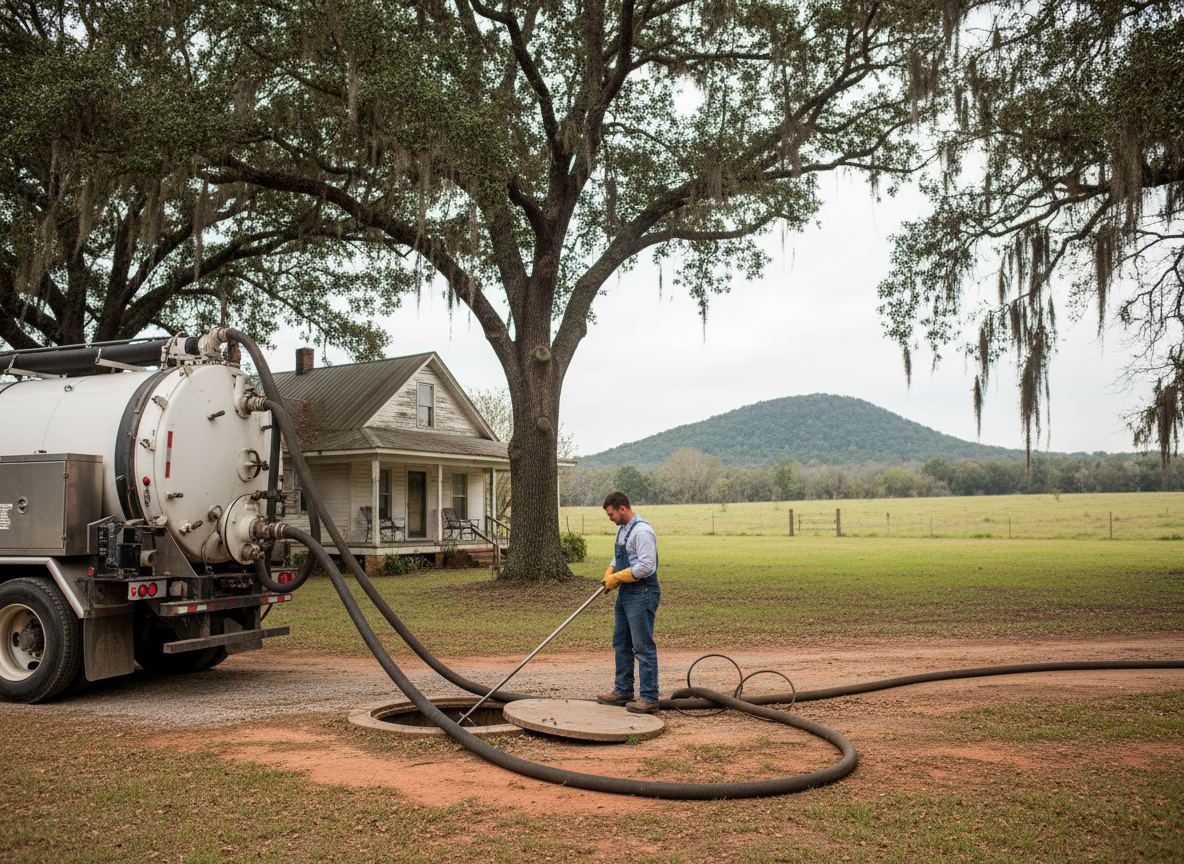
In Carrollton neighborhoods from the Maple Street Historic District to lots near the Little Tallapoosa River, we regularly open tanks that have gone years without attention. Rural properties along GA-166 and GA-61 often sit on slow-draining red clay that holds water after heavy spring rains, so solids build faster than on sandy ground. Homeowners notice gurgling drains or faint sewage odor near the house before backups reach the living space. We see both original concrete tanks from decades ago and newer fiberglass units in subdivisions, many without risers, which means digging each time.
Our crew measures the sludge and scum layers with a sludge judge before pumping, then inspects the inlet and outlet tees and effluent filter for clogs or damage. We check the distribution box for even flow and look for roots that have entered through old seams. On lots where water softener discharge or garbage disposal use is heavy, the bottom layer is thicker and requires extra passes. After pumping we wash down the walls and baffles so the next inspection shows true accumulation rates rather than leftover residue.
Because Piedmont terrain around Carrollton creates pockets where water sits, we always verify the drain field is not already saturated before closing the tank. Heavy summer humidity keeps soil moisture high, so a clean tank can still back up if the field is compromised. We note whether the tank is buried deep or has shifted from tree roots common on larger rural parcels. Every job ends with a written summary of what was removed and any immediate concerns that need attention before the next heavy rain.
Technician insight
In Carrollton the thing that catches most people out with septic tank cleaning is how fast red clay around the Little Tallapoosa River holds water after one heavy spring rain. Older tanks off US-27 or GA-16 often have no risers and sit under mature trees, so roots reach the baffles long before the homeowner notices slow drains. Skipping the filter clean on those visits just moves the problem to the field.
Backup near UWG after spring rains
A homeowner on a rural lot west of the University of West Georgia called after toilets began gurgling following several days of rain. We located the tank, found the scum layer had reached the outlet tee and the red clay field was holding water. After pumping and cleaning the filter we confirmed the distribution box was still splitting flow evenly, restoring normal drainage without further excavation.
Septic Tank Cleaning Services We Offer
✓Sludge and Scum Layer Removal
We pump out accumulated solids and floating scum so the tank regains full capacity and the drain field receives clearer effluent.
✓Effluent Filter Cleaning
Filters are removed, rinsed and reinstalled to stop solids from reaching the drain field and shortening its life.
✓Inlet and Outlet Tee Inspection
Tees and baffles are checked for cracks or blockages that allow solids to bypass the tank and clog laterals.
✓Riser and Lid Access Upgrade
Where tanks lack risers we install them so future cleanings require no digging and lids stay at grade for quick checks.
✓Pump Chamber and Float Switch Service
Chambers are cleaned and switches tested so aerobic systems and alarm panels continue to operate correctly after heavy rain.
How it works
- 1
Locate and Expose the Tank
We find the tank using records and probing, then clear access points on lots where red clay and grass have covered lids.
- 2
Measure Layers and Inspect Components
Sludge depth, scum thickness and the condition of baffles, tees and the effluent filter are recorded before any pumping begins.
- 3
Pump and Clean Interior Surfaces
All liquids and solids are removed, walls are washed, and the distribution box is checked for even flow across the field.
- 4
Reassemble and Document Findings
Lids are secured, any new concerns are noted, and the homeowner receives a summary of tank condition and soil observations.
Quotes
Cost depends on tank size, access difficulty on the lot and the amount of solids present.