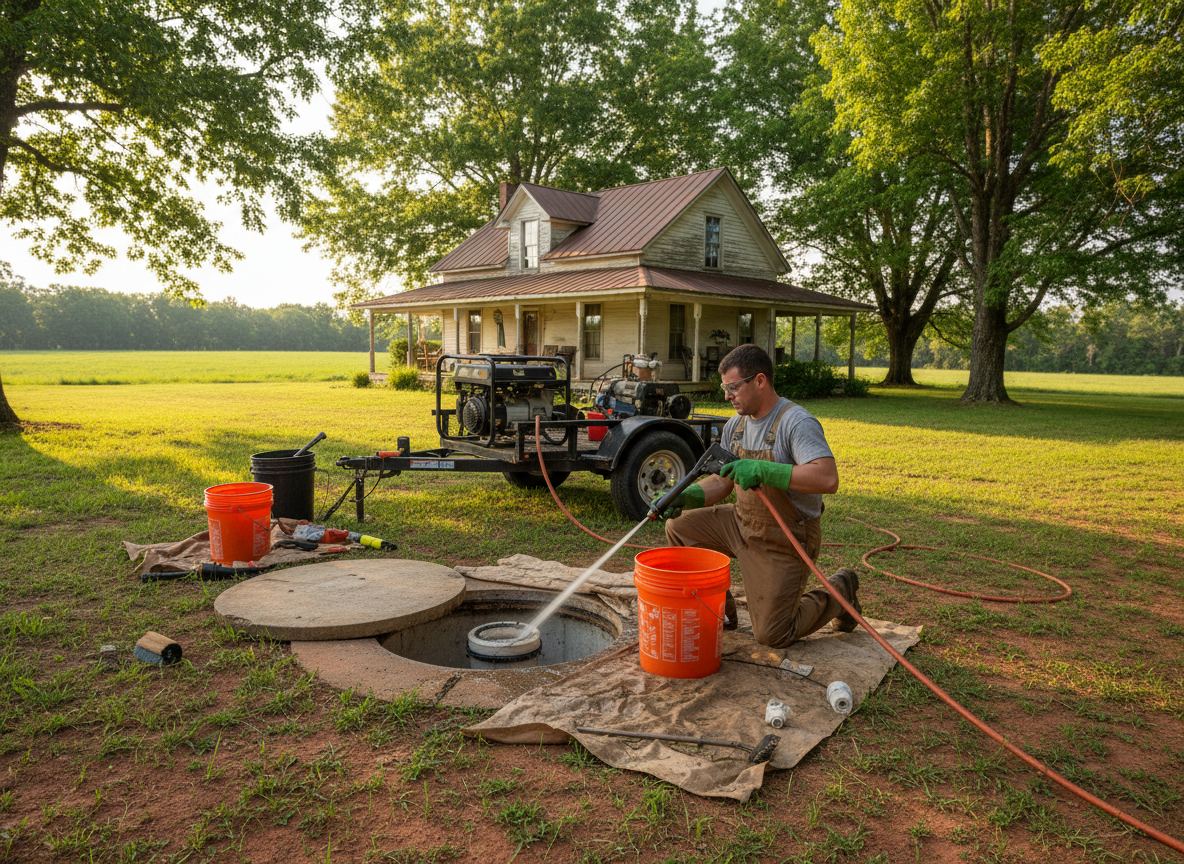
On rural lots off GA-16 and GA-61 around Carrollton, we regularly open tanks where effluent filters sit completely coated in sludge after heavy spring rains. The red clay common to Carroll County packs into the filter slots and slows drainage even when the rest of the system still looks clear. We pull the filter, note the thickness of the scum layer above it, and check whether the inlet and outlet tees are also restricted before any water is added back to the tank.
Homeowners near the University of West Georgia and Maple Street Historic District often notice gurgling at fixtures or faint sewage odor when the filter has been ignored for two or three pumping cycles. We use a hose with a directional nozzle to break up the compacted material without damaging the filter housing, then inspect the distribution box for any carry-over of solids that could reach the drain field. On older original tanks the filter is frequently buried deeper than newer installations, so we locate it by feel and confirm the lid is intact before closing.
After cleaning we reinstall the filter and check that the float switch in any pump chamber still operates freely. Heavy summer humidity and water softener discharge add extra load to the filter in subdivisions off US-27, so we also note whether the garbage disposal is contributing to faster scum buildup. This step-by-step check prevents the saturated drain field conditions that are hard to reverse once the clay soil holds the moisture.
Technician insight
In Carrollton, the thing that catches most people out with Septic Filter Cleaning is how fast red clay from a single heavy spring rain packs the slots on older tanks near the Little Tallapoosa River. Homeowners assume the filter only needs attention at pumping time, but on lots with slow-draining Piedmont soil the filter can choke weeks earlier and send water back toward the house before anyone notices.
Clogged Filter After Spring Rains
A homeowner off GA-166 reported slow drains after several days of rain. We opened the tank and found the effluent filter completely blocked with red clay and scum. After rinsing the filter and clearing the outlet tee we restored flow; the drain field stayed dry and no further backup occurred.
Septic Filter Cleaning Services We Offer
✓Effluent Filter Cleaning
We remove and rinse the effluent filter to clear sludge and scum so wastewater reaches the drain field without restriction.
✓Inlet and Outlet Tee Service
We inspect and clean the inlet and outlet tees during every filter visit to stop early solids carry-over into the absorption area.
✓Riser and Lid Access Cleaning
We clear debris from risers and lids so the filter can be reached quickly on future visits without digging through red clay.
✓Pump Chamber Filter Check
We examine filters inside pump chambers on aerobic systems and clear any buildup that could trigger the alarm float switch.
✓Distribution Box Inspection
We open the distribution box while the filter is out to confirm even flow and catch any solids that have already passed the filter.
How it works
- 1
Locate and Expose the Tank
We find the buried tank on the rural lot using existing markers or probing, then remove the lid without damaging concrete or PVC risers.
- 2
Remove and Assess the Filter
We pull the effluent filter, measure the sludge and scum layers, and note any damage to baffles or tees before cleaning begins.
- 3
Clean the Filter and Components
We spray the filter and connected parts with a low-pressure hose to break up clay and organic buildup while containing all material inside the tank.
- 4
Reinstall and Verify Flow
We seat the clean filter, confirm the outlet tee is clear, and run water to check that the distribution box receives even flow without backup.
Quotes
Cost depends on tank size, access and condition.